About tears to the anal sphincter muscle
When the anal sphincter muscle has been partially or completely torn during childbirth, it is normal to experience pain the first month after having given birth, and for some women, for even longer. You have been sutured with dissolving stitches that will gradually disappear on their own within approximately two months. The anal sphincter is the ring-shaped muscle that surrounds the opening of the rectum. The muscle helps control bowel movements and prevents gas from escaping the bowels.
Things to be aware of
Contact us immediately if your condition worsens
You should contact us immediately at (+45) 38 68 94 53 if
- you cannot control your bowel movements
- you cannot feel when you need to have a bowel movement
- the swelling gets worse
- the pain from the tear becomes more intense
- you think your stitches have opened
- you develop a fever.
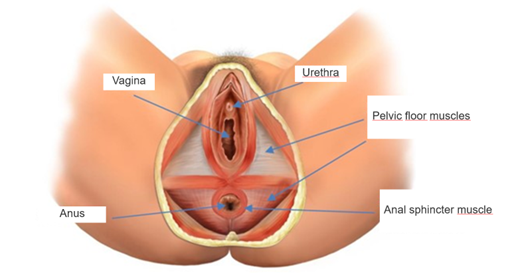 Illustration: GynZone
 Discomfort or pain
You may have trouble controlling gas and stool
Some women experience problems controlling gas from the bowels and, in rare cases, difficulty controlling bowel movements.
You may experience soreness and discomfort
It is common to experience pain in the weeks following childbirth. Once the tear begins to heal, it is normal to experience burning, soreness, swelling and itching for a few months. The tear should be healed after 3-4 weeks, but it may take up to 2 months before the stitches have completely dissolved.
You will receive pain-relieving medicine
You will be offered pain-relieving medicine while you are at the hospital.
Continue taking pain-relieving medicine after returning home
You should continue taking pain-relieving medicine after you return home even if you are breastfeeding. We recommend taking 2 x 500 mg paracetamol up to 4 times a day and 2 x 200 mg ibuprofen up to 3 times a day. You will receive a prescription to buy pain-relieving medicine.
Continue taking pain-relieving medicine for as long as you are in pain. When your pain subsides, you can stop taking ibuprofen, but it is a good idea to continue taking paracetamol for a few more days.
Use ice packs to relieve pain and swelling
You can use an ice pack to relieve pain and swelling. You can buy a reusable ice pack, for example at the pharmacy, or you can make one yourself by wetting a sanitary towel and freezing it in a freezer bag. Ensure the ice pack is wrapped in a cloth or towel before applying, as direct skin contact can cause ice burns.
Apply the ice pack to the tear for 15 minutes at a time, every few hours. Do this for as long as necessary.
Care and hygiene
Check your stitching
We recommend you use a mirror to check how your stitching is healing. It is a good idea to use a mirror to check your tear with a nurse or midwife before leaving hospital, so you can monitor the healing process yourself.
Precautions when using the toilet
Below are some tips on how you can reduce discomfort and pain when using the toilet. Find out what works best for you and do it for as long as you need:
- Do not strain during bowel movements.
- Use a footstool to help relax your legs while sitting on the toilet.
- Support your perineum with your hand or a clean washcloth during bowel movements.
- For the first 10 days, rinse the area with water using a handheld shower after bowel movements.
- Pat dry gently with a clean, soft cloth or towel.
- After the first 10 days, your skin should have healed enough to use toilet paper.
- You can use toilet paper after urinating if it feels comfortable. If urinating causes stinging, rinsing with water while urinating may provide relief.
It is okay to continue rinsing with water while urinating or after you have had a bowel movement if this is more comfortable for you. However, stop rinsing if your skin becomes irritated.
Preventing constipation
It is important to avoid becoming constipated to reduce pressure on your pelvic floor when going to the toilet. You can prevent constipation by
- eating regular meals and choosing foods high in fibre, such as grains, vegetables and fruits
- drinking 1.5-2 litres of fluids daily.
During your hospital stay, you will be offered Magnesia, which is a laxative. Magnesia softens your stool, making it easier to pass. We recommend that you
- take 1-2 tablets of Magnesia every evening
- reduce or stop taking Magnesia if your stools become loose
- continue for as long as you need – even after you return home.
The tear takes 3-4 weeks to heal, and throughout this period it is important to avoid becoming constipated. Magnesia is neither harmful nor addictive, and it is safe to take while breastfeeding. You can buy Magnesia without a prescription at the pharmacy.
Movement and rest
Protect your pelvic floor in the first month
During the first 3-4 weeks after giving birth, your tear needs time to heal.
You can reduce pressure on your pelvic floor by
- avoiding sitting or standing for extended periods if this causes discomfort. Using a soft cushion may provide relief in the first couple of days or weeks.
- avoiding sitting on a ring cushion, as this pulls on the skin around the stitches and puts strain on your pelvic floor.
- lying down when you are breastfeeding. This also helps to relieve your pelvic floor.
- lying down and relaxing if you are experiencing pain or need a break. It is common to experience a heavy feeling in your lower abdomen when standing or sitting for extended periods. Listen to your body and rest when needed.
- avoiding heavy lifting. You should not experience pain when lifting.
Gradually resume your everyday activities
You can gradually begin to put more strain on yourself after the first month. Slowly resume your normal activities to see how much your body can handle:
- Go for short walks and then gradually begin to increase their length and duration.
- Be careful when lifting. If it hurts or you feel a tugging sensation in your pelvic floor, then the object is too heavy.
- You can begin attending postpartum exercise classes or other exercise classes one month after birth if you feel ready. It can be helpful to find a class where the instructor has special knowledge of pelvic floor exercises after childbirth.
If you feel sore after an activity, it's usually a sign that the activity was too hard on your pelvic floor.
Pelvic floor muscle training is important
Your body and in particular your pelvic floor have been strained by pregnancy, childbirth and the tear. We recommend that you begin doing pelvic floor muscle training as soon as it feels comfortable.
There should be no pain in connection with the training. To avoid putting too much strain on your muscles, only squeeze until you can feel a slight tightening of your pelvic floor muscles.
It is a good idea to do pelvic floor muscle training every day and to do at least 10-20 squeezes once a day. Remember to breathe while squeezing.
Practice short squeezes in the beginning and gradually increase the length of each squeeze until you can hold each squeeze for 10 seconds at a time. The interval between squeezes should last as long as the squeeze itself.
You can also make pelvic floor training as a regular part of your day, for example by squeezing before and while you get up or sit down or when you cough, sneeze or laugh. Remember to tighten your pelvic muscles before picking up your baby.
How to do your pelvic floor muscle training
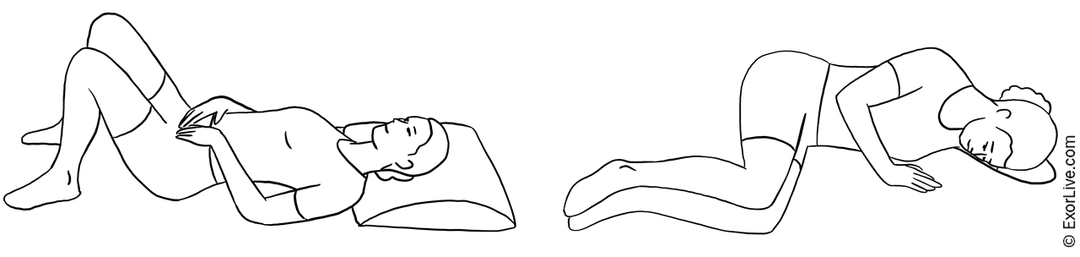
You can do your pelvic floor muscle training while lying on your back, on your side, or when standing or sitting. If your pelvic floor muscles feel very sore or swollen, it can feel better to do them lying down. Practice squeezing and releasing to get familiar with the sensation.
- Squeeze the muscles around the opening of the rectum, thereby tightening all your pelvic floor muscles.
- Try to relax your stomach, buttocks and thighs while squeezing. Remember to breathe normally.
- The break between each squeeze should last as long as the squeeze itself.
Resuming sexual activity
You can have intercourse once the tear has healed, and when you feel ready. Use a condom if you are still bleeding after giving birth.
It is normal for the vaginal opening or the vaginal canal to feel tender to start with. The vaginal mucosa can feel dry and uncomfortably sensitive. It is therefore a good idea for you and your partner to use silicone lube and possibly some numbing gel for as long as you need. Lubricants and numbing creams can be purchased over the counter at a pharmacy. Be aware that some condoms cannot be used with a silicone lubricant, so ask about this when purchasing the lubricant if you are going to be using a condom.
The most important thing is that you feel ready to resume sexual activities. Talk to your doctor at Kvinde- og Bækkenbundssygdomme, klinik 1, (Gynaecology and Pelvic Floor Disorders Clinic) or your physiotherapist if you experience persistent pain during intercourse.
Practicalities
Check-ups
You will be invited to a check-up approximately 7-14 days after giving birth. You will be notified about the appointment via digital or physical post.
At the check-up, we will talk to you about how you are feeling and check on how the tear is healing. It is a good idea to write down your questions from home, so you remember to ask them at the appointment. You are very welcome to bring a family member with you.
If there are issues with the healing process, you will be invited to additional check-ups. If everything looks fine, you can still contact us in the first 12 months after birth if you experience any problems related to the tear. You can call Kvinde- og Bækkenbundssygdomme, klinik 1, (Gynaecology and Pelvic Floor Disorders Clinic) at (+45) 38 68 84 28 on weekdays between 08:00 - 15.00.
Physiotherapy
You will be offered a consultation with a physiotherapist approximately one month after giving birth. The physiotherapist will examine your pelvic floor muscles in your vaginal opening and in your anal opening. You will also be asked if you are having difficulty holding urine, controlling gas and stool. The physiotherapist will provide you with further guidance on how to strengthen your pelvic floor muscles. You should do pelvic floor exercises until your appointment with the physiotherapist. You will be notified by digital or physical post.
Appointment with your general practitioner 8 weeks after delivery
Just like anyone else who has given birth, you can schedule an examination with your general practitioner 8 weeks after delivery. Contact your general practitioner to book the appointment.